

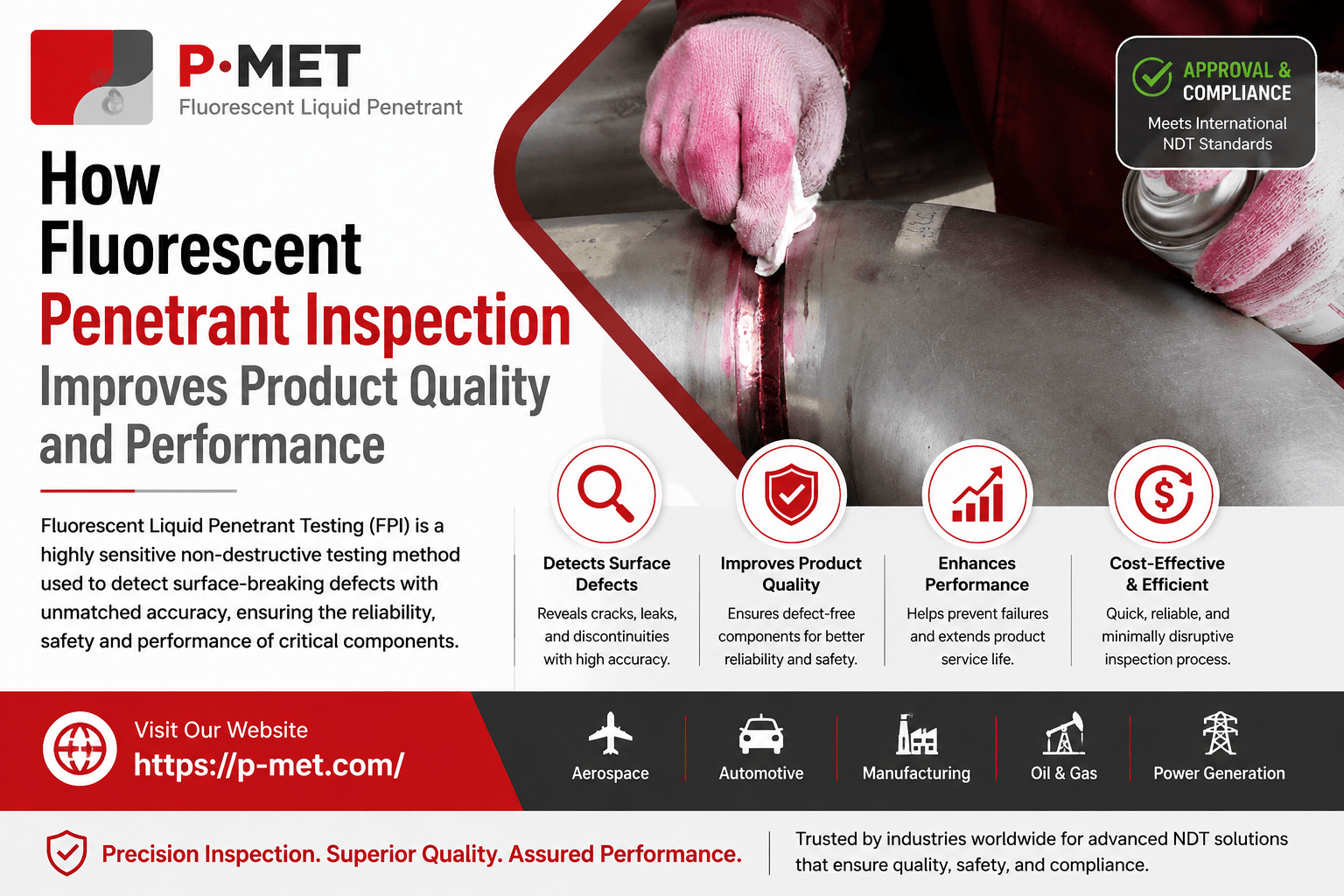
How Fluorescent Penetrant Inspection Improves Product Quality and Performance
In modern manufacturing, maintaining high standards of quality and reliability is essential for ensuring product performance and customer satisfaction. Industries such as aerospace, automotive, energy, construction, and metal fabrication depend on advanced evaluation methods to identify hidden surface defects before products reach the market. One of the most effective non-destructive examination techniques used today is fluorescent penetrant inspection, which helps manufacturers detect discontinuities that may not be visible to the naked eye. By identifying flaws early in the production cycle, businesses can reduce waste, improve safety, and enhance overall product durability.
This method works by applying a specially formulated material to the surface of a component. The material enters tiny cracks, pores, and imperfections through capillary action. After excess material is removed, a developer is applied to draw out any trapped indications. Under ultraviolet light, these indications become highly visible, allowing inspectors to identify potential issues quickly and accurately.
The Role of Surface Defect Detection in Manufacturing Quality
Product quality is closely linked to the integrity of the materials and components used during production. Even microscopic flaws can compromise structural strength, leading to premature wear, reduced efficiency, or unexpected failure. This is why manufacturers increasingly rely on advanced examination techniques to verify the condition of critical parts.
A well-executed evaluation process offers several benefits:
- Detects minute surface-breaking discontinuities before products are released.
- Improves manufacturing consistency and quality control.
- Reduces the risk of component failure during operation.
- Minimizes costly repairs, recalls, and warranty claims.
- Supports compliance with industry regulations and standards.
- Enhances customer confidence in product reliability.
- Extends the service life of equipment and machinery.
By identifying defects at an early stage, organizations can address quality concerns before they become larger operational problems.
One important application of this process is the fluorescent test, which allows inspectors to locate extremely fine surface imperfections with exceptional sensitivity. Because the indications glow brightly under ultraviolet illumination, even very small defects can be detected quickly. This level of precision makes the method valuable for inspecting critical components where safety and reliability are paramount.
Manufacturers often integrate this procedure into their quality assurance systems to ensure that products consistently meet design specifications. Components such as turbine blades, welded structures, castings, forgings, and machined parts commonly undergo examination before being approved for use.
Another major advantage is its versatility. The process can be applied to a wide variety of non-porous materials, including metals, ceramics, and certain plastics. This flexibility allows companies across multiple industries to maintain consistent quality standards while reducing production risks.
In industries where operational reliability is crucial, preventive quality measures play a significant role in minimizing downtime. Detecting flaws before equipment is installed or deployed helps organizations avoid costly interruptions and unexpected maintenance expenses.
The use of fluorescent liquid penetrant testing is especially valuable in sectors where components experience high stress, pressure, or temperature fluctuations. Aerospace manufacturers, for example, rely on this technique to evaluate critical engine and structural parts. Similarly, automotive companies use it to assess components that must withstand continuous mechanical loads throughout their service life.
Beyond defect identification, this approach also contributes to process improvement. When recurring flaws are discovered during evaluation, manufacturers can analyze production methods to determine the root cause. Adjustments to machining, welding, casting, or heat-treatment processes can then be implemented to improve product consistency and reduce defect rates.
Another key benefit is cost efficiency. Traditional destructive examination methods often require sample components to be cut, broken, or otherwise damaged during evaluation. Non-destructive approaches allow manufacturers to inspect finished products without affecting their usability. As a result, organizations can maintain production efficiency while preserving valuable materials and resources.
Environmental and sustainability considerations also support the adoption of advanced quality assurance practices. By identifying defects early and reducing scrap rates, manufacturers can lower material waste and improve resource utilization. This contributes to more sustainable production operations while helping companies meet environmental objectives.
The effectiveness of this inspection method depends on proper procedures, qualified personnel, and adherence to industry standards. Training and certification ensure that inspectors can accurately interpret indications and distinguish genuine defects from irrelevant markings. Consistent procedures help maintain reliable results across different production environments and applications.
Technological advancements continue to improve the efficiency of surface examination processes. Modern equipment, enhanced ultraviolet lighting systems, and improved consumable materials have increased sensitivity and accuracy while reducing inspection times. These innovations enable manufacturers to achieve higher productivity without compromising quality.
As global competition increases, companies must consistently deliver products that meet stringent performance expectations. Quality assurance methods that provide accurate defect detection help organizations strengthen their reputation, reduce operational risks, and improve long-term profitability.
Conclusion
Product quality and performance depend heavily on the ability to identify surface defects before components enter service. Advanced examination techniques provide manufacturers with a reliable way to detect imperfections, enhance safety, and improve durability. By incorporating these methods into quality control programs, organizations can reduce failures, optimize production processes, and maintain compliance with industry requirements. For businesses seeking dependable quality assurance solutions, searching for Fluorescent penetrant Inspection near me can be an effective step toward ensuring consistent product reliability and operational excellence.