

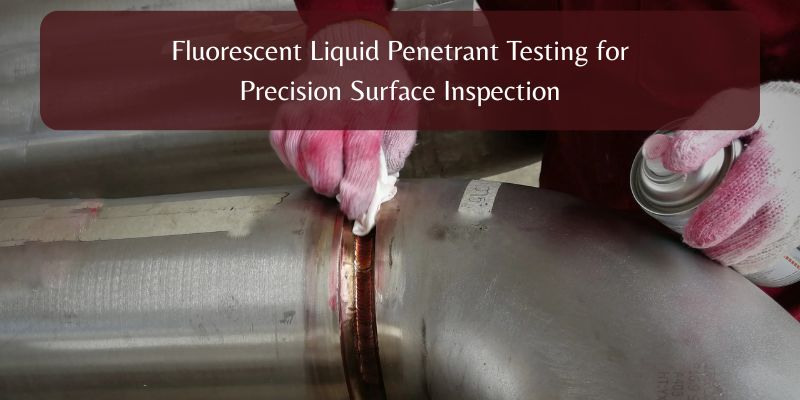
Fluorescent Liquid Penetrant Testing for Precision Surface Inspection
Introduction to Modern Surface Inspection
In industries where safety and reliability are critical, detecting even the smallest surface defects is essential. Components used in aerospace, automotive, manufacturing, and heavy engineering must undergo strict quality checks to ensure they perform under demanding conditions.
This inspection technique allows professionals to detect surface cracks, porosity, and other discontinuities that are not visible to the naked eye. By using fluorescent materials that glow under ultraviolet light, it provides enhanced visibility and accuracy compared to conventional inspection methods.
Understanding the Basics of Penetrant Testing
At its core, penetrant inspection is based on capillary action. A liquid penetrant is applied to the surface of a material, where it seeps into tiny cracks and defects. After a certain dwell time, the excess penetrant is removed and a developer is applied to draw out the trapped liquid.
This process is commonly known as liquid penetrant testing, and it is widely used because of its simplicity and effectiveness. It is suitable for non porous materials such as metals, ceramics, and certain plastics.
Key benefits of this inspection method include:
- Ability to detect very fine surface defects
- Simple and cost effective process
- Suitable for complex shapes and surfaces
- Minimal equipment requirements
Because of these advantages, it remains one of the most widely used inspection techniques in industrial applications.
What Makes Fluorescent Inspection Unique
While conventional penetrant testing uses visible dyes, fluorescent penetrant inspection offers a higher level of sensitivity. In this method, the penetrant contains fluorescent particles that emit a bright glow when exposed to ultraviolet light.
This glow creates a strong contrast between the defect and the surrounding surface, making it easier for inspectors to identify even microscopic flaws. The inspection is typically carried out in a controlled environment with proper ultraviolet lighting to ensure accurate detection.
Role of Advanced Penetrant Solutions
The effectiveness of this inspection method depends largely on the quality of the penetrant used. One advanced solution commonly used in the industry is PMC lumin check fluorescent penetrant. This type of penetrant is specifically designed to provide strong fluorescence and excellent penetration capabilities.
Such high quality solutions offer several advantages:
- Enhanced visibility under ultraviolet light
- Consistent penetration into fine cracks
- Stable performance during inspection
- Easy removal from the test surface
Step by Step Inspection Process
The fluorescent liquid penetrant testing method follows a structured process to achieve consistent results.
| Step | Description |
| Surface Cleaning | Removal of contaminants such as oil and dirt |
| Penetrant Application | Application of fluorescent liquid to the surface |
| Dwell Time | Allowing penetrant to seep into defects |
| Excess Removal | Cleaning off excess penetrant from the surface |
| Developer Application | Drawing penetrant out of cracks |
| UV Inspection | Observing glowing indications under ultraviolet light |
Following these steps ensures that even the smallest surface defects are clearly identified.
Industrial Applications
Penetrant inspection methods are widely used across industries due to their versatility and effectiveness. The liquid penetrant testing approach is particularly useful for components that require high reliability.
Common applications include:
- Aerospace component inspection
- Automotive engine part testing
- Weld inspection in fabrication industries
- Quality control of castings and forgings
- Maintenance of industrial machinery
Advantages of Fluorescent Penetrant Methods
Fluorescent inspection techniques offer several benefits that make them essential in modern quality control systems.
Some key advantages include:
- High sensitivity for detecting micro cracks
- Clear defect visibility under ultraviolet light
- Suitable for complex and intricate parts
- Non destructive inspection process
- Efficient and reliable results
These benefits make fluorescent penetrant inspection a preferred choice for industries that demand precision and safety.
Frequently Asked Questions
- What materials can be inspected using this method?
It is suitable for non porous materials such as metals, ceramics, and certain plastics.
- Why is ultraviolet light used in inspection?
Ultraviolet light causes the fluorescent penetrant to glow, making defects more visible.
- Can this method detect internal defects?
No, it is designed only for surface breaking defects.
- Is the process safe for components?
Yes, it is a non destructive method and does not damage the material being tested.
- How accurate is fluorescent penetrant inspection?
It is highly accurate for detecting even very small surface defects when performed correctly.
Conclusion
Fluorescent penetrant inspection has become a vital part of modern quality control processes. Its ability to detect fine surface defects with high accuracy makes it indispensable in industries where safety and reliability are critical. With advanced solutions and expertise, P-Met continues to support industries in achieving dependable inspection results and maintaining high performance standards.