

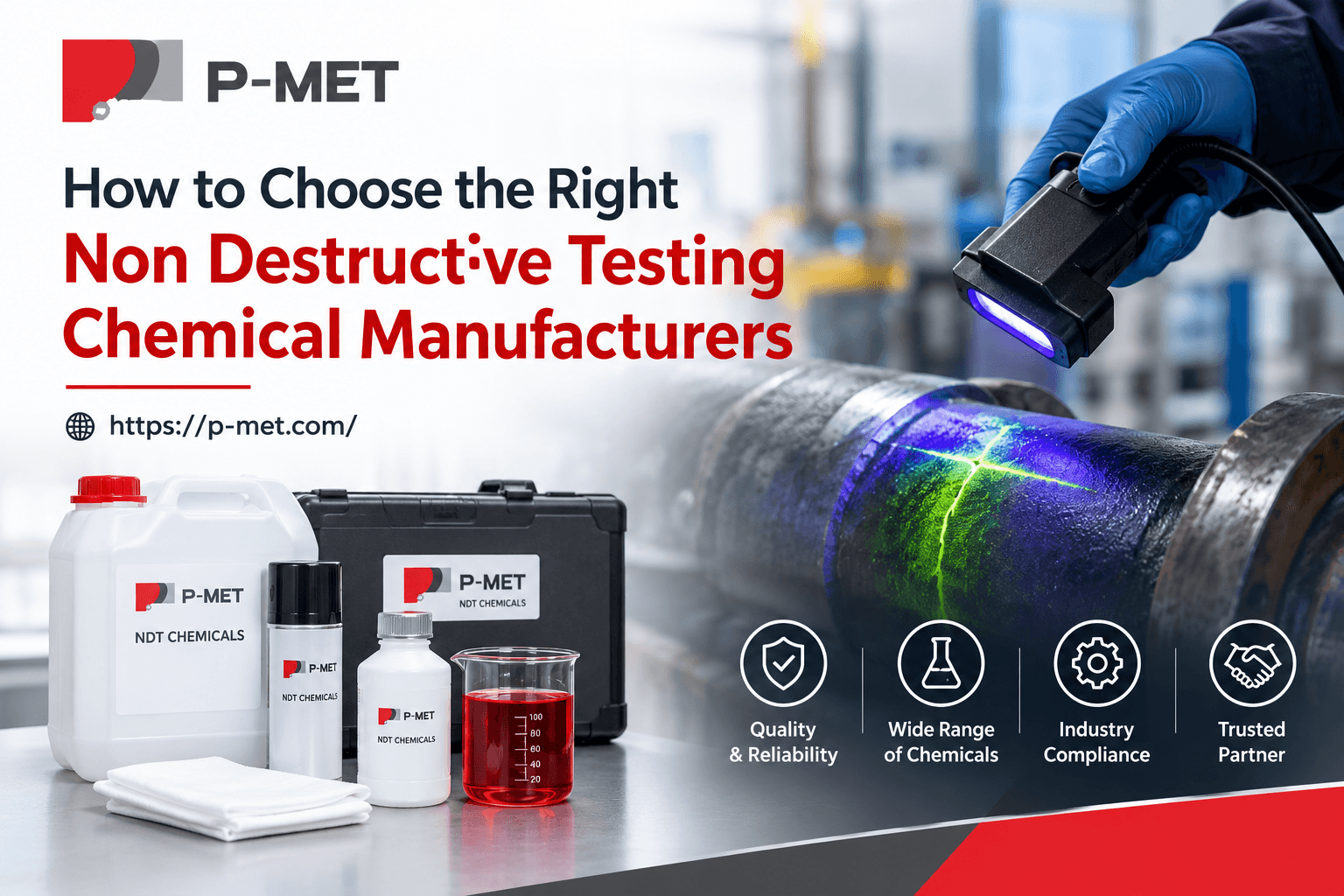
How to Choose the Right Non Destructive Testing Chemical Manufacturers
Choosing the right supplier for inspection chemicals is important because the quality, consistency, and documentation of these materials can directly affect defect detection and inspection reliability. The right non destructive testing chemical manufacturers should offer suitable formulations, consistent batch quality, technical documentation, safety information, and dependable supply. This guide explains the key factors to evaluate before making a purchasing decision.
The right NDT chemical manufacturer should be evaluated on product quality, applicable testing standards, formulation consistency, technical support, safety documentation, traceability, packaging, and supply reliability. Compare suppliers based on your inspection method, material compatibility, operating conditions, compliance requirements, and total cost rather than choosing solely on price.
What Are Non-Destructive Testing Chemicals?
Non-destructive testing chemicals are specialized consumables used to identify surface or near-surface discontinuities without permanently damaging the inspected component.
Depending on the inspection technique, these products can include:
- Penetrants used for liquid penetrant inspection.
- Developers that help reveal penetrant indications.
- Cleaners and removers used before or after inspection.
- Magnetic particle testing materials for ferromagnetic components.
- Fluorescent formulations designed for inspection under ultraviolet or suitable lighting conditions.
These materials are used across industries such as aerospace, automotive, fabrication, power generation, oil and gas, railways, casting, forging, and general engineering.
The selection should therefore begin with the inspection process rather than the product price.
Why Does the Manufacturer Matter?
A testing chemical may appear simple, but its formulation can influence sensitivity, background staining, removability, visibility, and inspection repeatability.
A dependable manufacturer should be able to provide information about product composition, intended application, storage conditions, safety precautions, and relevant performance characteristics.
When comparing suppliers, consider:
- Consistency: Products should perform predictably from batch to batch.
- Documentation: Technical data sheets, safety data sheets, certificates, and batch information should be readily available.
- Technical knowledge: The supplier should understand the inspection process rather than simply selling consumables.
For example, a manufacturer supplying fluorescent penetrant materials should understand how the penetrant interacts with the inspection process, cleaning stage, developer, lighting conditions, and component surface.
How Should You Evaluate Non Destructive Testing Chemical Manufacturers?
The most effective approach is to create a structured supplier evaluation instead of relying on advertisements or the lowest quotation.
1. Match the Product to Your Inspection Method
First identify exactly which process you use.
Liquid penetrant inspection, magnetic particle inspection, and other examination techniques require different consumables. Even within one method, visible and fluorescent systems may have different requirements.
Ask the supplier:
- Is the product suitable for the required inspection technique?
- What materials and surfaces can it be used on?
- What preparation and removal procedures are recommended?
- What operating conditions are supported?
This prevents a common purchasing mistake: selecting a chemical based only on its product name without considering the complete inspection procedure.
2. Check Standards and Technical Requirements
Standards provide a useful framework for evaluating inspection consumables. Depending on the application, relevant references may include ASTM, ISO, ASME, EN, or customer-specific specifications.
For example, ASTM E1417/E1417M addresses liquid penetrant testing, while ISO 3452 covers principles and general requirements for penetrant testing.
However, the applicable requirement depends on the component, industry, inspection procedure, and customer contract. A supplier should not simply claim that a product is “standard compliant” without explaining the applicable specification and supporting documentation.
3. Examine Product Documentation
Good documentation is an important indicator of supplier maturity.
Before placing a substantial order, request relevant documents such as:
- Technical Data Sheet (TDS)
- Safety Data Sheet (SDS)
- Certificate of Analysis or conformity documentation, where applicable
- Batch or lot identification
- Storage and shelf-life information
- Product specifications
- Application instructions
Traceability becomes particularly important when inspection records may need to be reviewed during an audit or quality investigation.
Which Product Characteristics Should You Compare?
Price alone does not provide a reliable basis for comparison. Two apparently similar products may behave differently during actual inspection.
| Evaluation Factor | Basic Supplier | Strong Supplier |
| Product consistency | Variable or unclear | Controlled and documented |
| Technical documentation | Limited | Comprehensive |
| Batch traceability | Limited | Clearly identified |
| Standards information | General claims | Applicable specifications explained |
| Technical support | Minimal | Application-focused |
| Supply continuity | Uncertain | Planned and reliable |
| Safety information | Incomplete | Clearly provided |
| Custom requirements | Limited flexibility | Better technical coordination |
The objective is to determine which supplier provides dependable inspection performance and manageable operational risk.
How Important Is Technical Support?
Technical support can become particularly valuable when an inspection process produces inconsistent results.
A knowledgeable supplier should be able to discuss issues such as excessive background, poor visibility, difficult removal, inadequate development, contamination, storage conditions, or incorrect application.
For non destructive testing, chemical selection should be considered alongside the complete inspection procedure. Changing one consumable without reviewing the surrounding process can sometimes create unexpected results.
A practical supplier evaluation can include a controlled trial on representative components before committing to large-volume procurement.
What Does NDT Non Destructive Testing Require From Chemical Suppliers?
NDT non destructive testing relies on repeatable procedures and appropriate consumables. Chemical products therefore need to remain stable during transportation, storage, and use.
Consider the following:
Storage and Shelf Life
Check recommended temperature ranges, shelf life, container requirements, and storage precautions. Poor storage can affect product performance even when the original formulation was appropriate.
Packaging
Packaging should suit the working environment and expected consumption. Containers must remain properly sealed and clearly labelled.
Batch Traceability
Batch numbers can help organizations investigate unexpected inspection results and maintain quality records.
Workplace Safety
Safety Data Sheets should be reviewed before use. Personnel should understand hazards, ventilation requirements, protective equipment, handling procedures, and disposal requirements.
What Common Mistakes Should Buyers Avoid?
Several purchasing decisions can create unnecessary quality or operational risks.
- Choosing only by price:
A cheaper chemical may have different consumption, performance, shelf life, or process requirements. Compare total operating cost rather than purchase price alone. - Ignoring compatibility:
A product suitable for one inspection procedure or component may not be appropriate for another. - Accepting unsupported claims:
Ask for documentation supporting claims about standards, performance, and intended applications. - Buying without trials:
Where practical, evaluate samples under controlled conditions using the actual inspection procedure. - Overlooking supply continuity:
A technically excellent product can still create operational problems if regular deliveries are unreliable.
Expert Due Diligence Checklist
Before approving a supplier, work through this sequence:
- Define the inspection method and applicable specification.
- Identify the required chemical category and performance characteristics.
- Request technical and safety documentation.
- Verify batch identification and traceability practices.
- Conduct representative product trials where appropriate.
- Review packaging, storage, shelf life, and logistics.
- Compare total cost, not simply unit price.
- Assess technical support and complaint handling.
- Confirm whether supply capacity matches your expected consumption.
- Keep supplier qualification and product records for future audits.
This process creates a more defensible purchasing decision and reduces the risk of switching products without adequate technical evaluation.
How Can Companies Manage Long-Term Supplier Risk?
Supplier selection should consider what happens after the first purchase.
Organizations with critical inspection requirements may benefit from maintaining approved alternatives, monitoring product performance, recording batch information, and periodically reviewing supplier quality.
A useful approach is to establish measurable purchasing criteria covering product conformity, delivery performance, documentation, technical response, and non-conformance handling.
For larger operations, procurement and quality teams should work together. Purchasing can evaluate commercial reliability, while quality personnel can assess whether the material meets the inspection procedure and applicable requirements.
Key Takeaways
- Select inspection chemicals according to the testing method and component requirements.
- Verify applicable ASTM, ISO, ASME, EN, or customer specifications.
- Request technical, safety, and traceability documentation.
- Evaluate samples under representative operating conditions when practical.
- Compare suppliers using quality, support, logistics, and total cost.
- Do not treat the lowest quotation as automatically the best option.
- Maintain records for batch traceability and supplier qualification.
Conclusion
Choosing among non destructive testing chemical manufacturers requires more than comparing product prices. The strongest evaluation considers technical suitability, applicable standards, documentation, traceability, safety, consistency, technical support, and supply reliability.
Companies looking for the Best non destructive testing chemical manufacturers should use a documented qualification process and verify products against their actual inspection requirements. Reviewing technical information from https://p-met.com/ can also help buyers understand available inspection consumables and make more informed procurement decisions.