

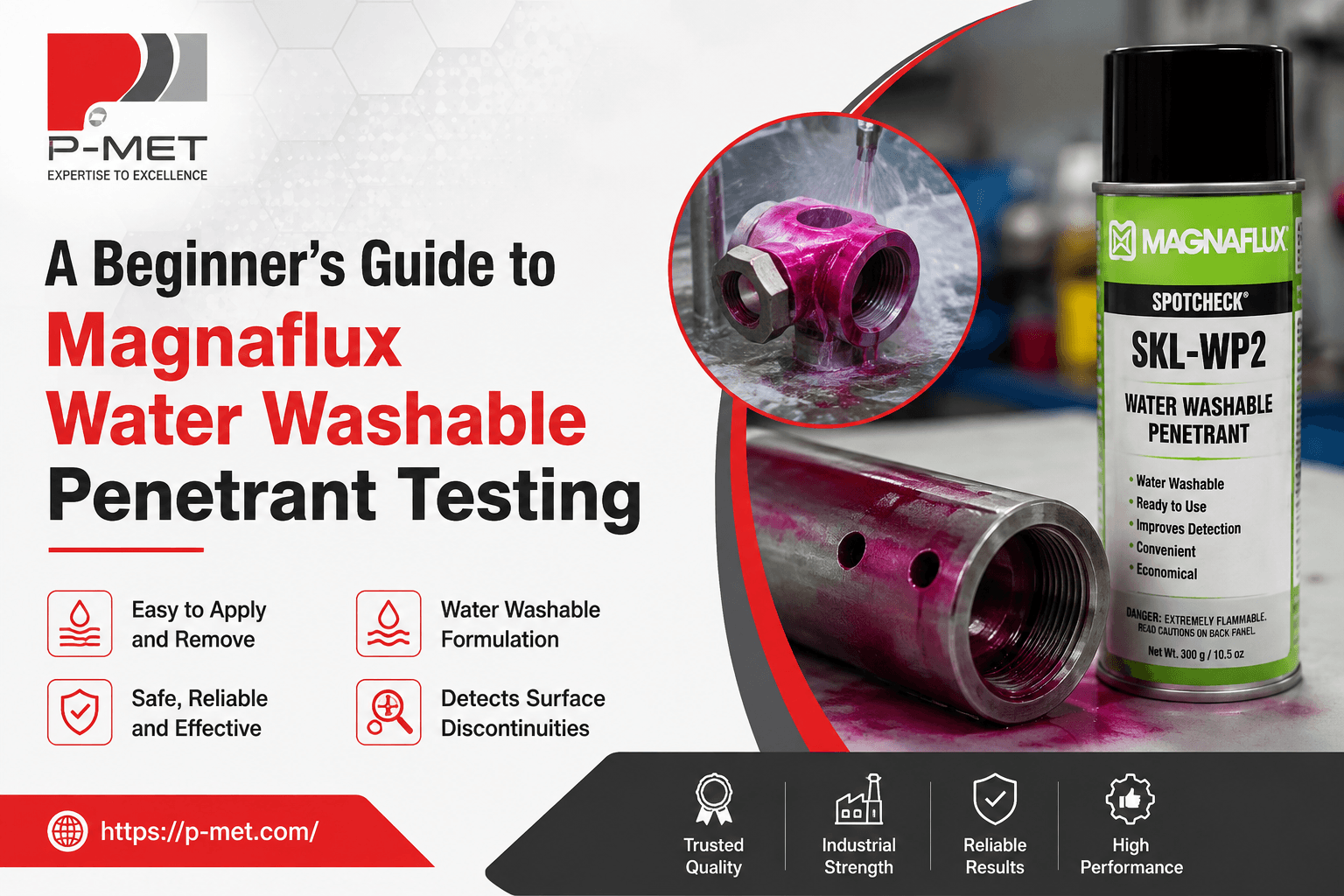
A Beginner’s Guide to Magnaflux Water Washable Penetrant Testing
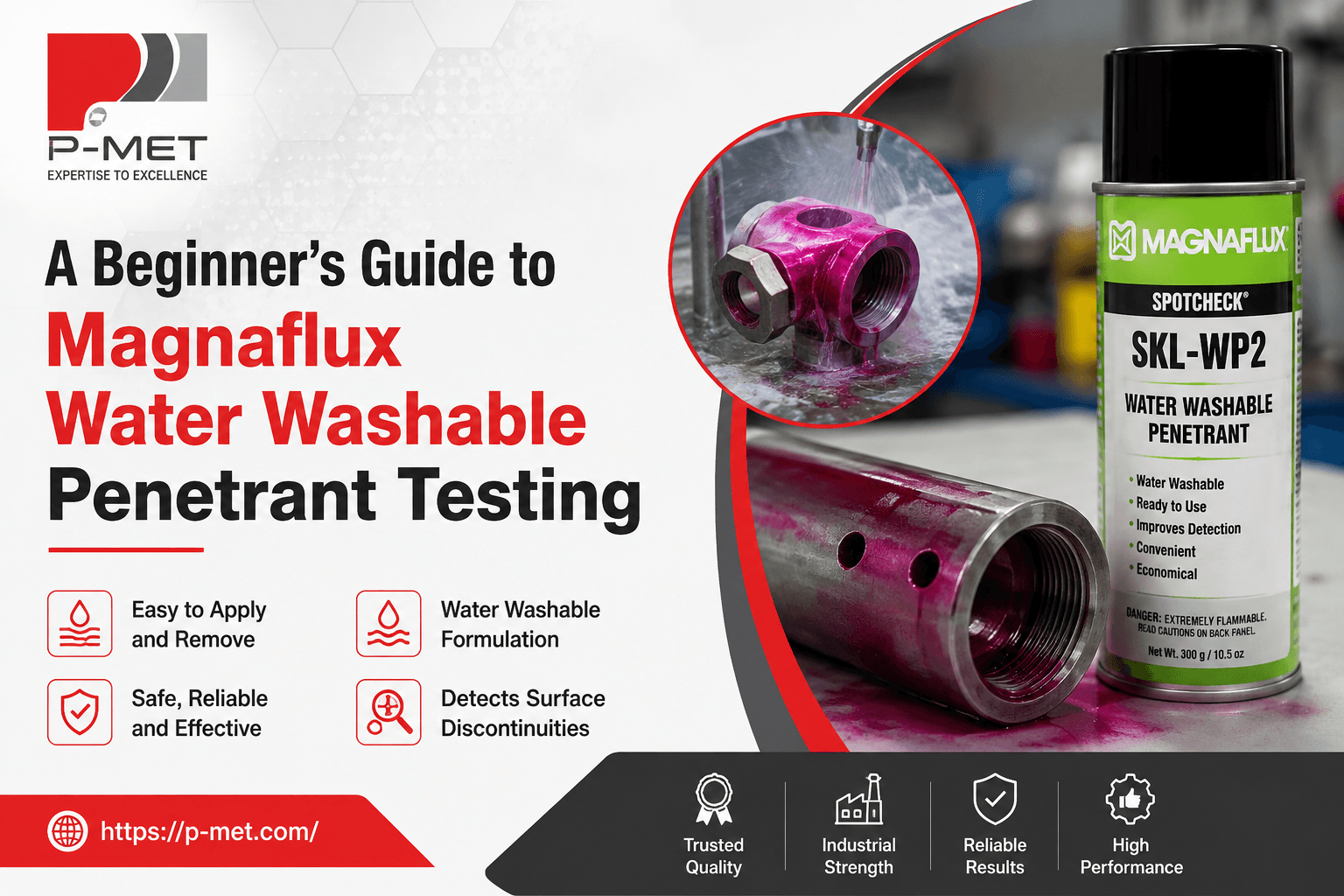
Non-destructive testing (NDT) plays an important role in checking the quality and reliability of components without causing damage during inspection. Among the established surface inspection methods, penetrant testing is widely used to identify cracks, laps, seams, porosity and other discontinuities that reach the surface. It is especially useful when visual inspection alone may not reveal small or fine defects.
For beginners, understanding magnaflux water washable penetrant provides a useful introduction to fluorescent penetrant inspection. The method relies on capillary action, controlled removal of excess penetrant, developer application and suitable UV-A inspection conditions. This guide explains how the process works, where it is useful, how to choose the right system and which mistakes should be avoided.
Quick Answer: What Is Water-Washable Penetrant Testing?
Water-washable penetrant testing is an NDT method used to find surface-opening defects in nonporous components. A fluorescent penetrant enters small discontinuities, excess penetrant is removed with a controlled water rinse, and a developer helps produce visible indications. Under suitable UV-A lighting, relevant indications can then be evaluated against applicable inspection requirements.
What Is Water-Washable Penetrant Testing?
Water-washable penetrant testing is a form of penetrant examination in which excess penetrant is removed from the component using water. The process is based on capillary action: when a suitable liquid reaches a surface-opening discontinuity, it can enter and remain inside the opening.
After excess penetrant has been removed, the penetrant trapped within discontinuities is made easier to observe. In fluorescent systems, UV-A illumination causes the penetrant to fluoresce, creating a visible indication against the darker inspection background.
ASTM E1417/E1417M provides requirements for liquid penetrant examination of nonporous components, while ISO 3452-1 establishes general principles for penetrant testing. The exact procedure should always be based on the applicable specification, product instructions and component requirements.
Why Is Penetrant Testing Important?
A component can appear visually acceptable while containing a small surface-breaking crack. Such a discontinuity may become more significant when the component experiences repeated loading, vibration, pressure or temperature changes.
Penetrant inspection provides an additional method for identifying these surface-connected flaws. It is particularly useful when the component has a complex shape or when small discontinuities need to be located before further manufacturing, assembly or service.
The method is not a replacement for every NDT technique. Since penetrant testing primarily detects discontinuities that are open to the surface, it cannot reliably identify a completely internal defect that has no surface connection.
How Does Magnaflux Water Washable Penetrant Work?
The process involves several controlled stages. Each stage contributes to the quality of the final inspection, so simply applying penetrant and washing it away is not enough.
1. Surface Preparation
The component must first be cleaned properly. Oil, grease, dirt, paint, scale and other contaminants can block surface openings and prevent penetrant from entering discontinuities.
Cleaning also needs to be compatible with the component material. Residues from cleaning products can themselves affect the inspection, which is why approved preparation methods should be followed.
2. Penetrant Application
The penetrant is applied over the area being inspected. Depending on the component and procedure, application can involve spraying, brushing or immersion.
Complete and consistent coverage is important. Areas that receive insufficient penetrant may produce weak or missed indications.
3. Dwell Time
The penetrant needs sufficient time to enter potential discontinuities. This period is commonly called dwell time.
Dwell time is not a universal number that should be copied between different applications. It depends on the penetrant system, material, surface condition and governing procedure. The manufacturer’s technical documentation and approved inspection procedure should therefore take priority.
4. Water Washing
After the required dwell period, excess penetrant is removed using a controlled water rinse.
This stage requires careful control. Excessive washing can remove penetrant from relevant discontinuities, while inadequate washing can leave excessive fluorescent background on the component.
5. Developer Application
A compatible developer is then used when required by the selected process. Developer helps draw penetrant from discontinuities toward the surface and can improve the visibility and definition of indications.
The developer type and application method should be compatible with the penetrant system and the inspection specification.
6. UV-A Inspection
Fluorescent penetrant systems are examined under suitable UV-A illumination. The inspector looks for fluorescent indications and evaluates their characteristics.
An indication does not automatically mean that a component should be rejected. Its significance depends on its size, shape, location, orientation and the acceptance criteria applicable to that component.
7. Evaluation and Documentation
The final stage involves evaluating indications against the relevant specification. Where required, the inspection results should be documented with appropriate component identification, inspection details and findings.
Good documentation creates traceability and supports quality-control decisions.
When Should You Use Water-Washable Fluorescent Penetrant?
Water-washable fluorescent penetrant systems can be suitable for many nonporous engineering components where surface-breaking defects need to be identified.
Common applications can include:
- Castings, forgings and machined components
- Welded and fabricated parts
- Aerospace and engineering components
- Steel, aluminum, nickel and titanium components
- Components where surface cracks or porosity may affect service performance
The correct product depends on the component and inspection requirement. A rough casting may require a different sensitivity level from a precision-machined component.
How Does Liquid Penetrant Testing Fit Into NDT?
Liquid Penetrant Testing is a surface examination method. Unlike radiographic or ultrasonic methods that can investigate internal regions under appropriate conditions, penetrant inspection is primarily concerned with discontinuities that are open to the surface.
This makes the technique valuable for detecting surface-connected cracks, laps, seams and similar imperfections.
Its relatively straightforward process is another reason it remains useful across manufacturing and maintenance environments. However, reliable results depend heavily on surface preparation, process control, suitable equipment and qualified personnel.
How Do You Choose the Right Sensitivity Level?
Penetrant products are available in different sensitivity classifications. Higher sensitivity generally means greater capability for revealing smaller indications, but choosing the highest available level is not automatically the correct approach.
Surface roughness is particularly important. A rough surface may produce considerable background fluorescence, making interpretation difficult. In contrast, a highly machined surface may allow finer indications to be distinguished more easily.
The correct selection should therefore consider the inspection specification, component geometry, material, surface finish, expected discontinuities and required level of sensitivity.
What Are Liquid Penetrant Testing Consumables?
Liquid Penetrant Testing Consumables commonly include penetrants, developers, cleaners or removers and, depending on the selected process, emulsifiers.
These materials work as a system. Using incompatible products or changing process materials without verifying compatibility can influence inspection performance.
Product documentation should be checked for recommended applications, sensitivity classification, temperature limits, removal requirements, storage conditions and applicable standards.
Comparison: Water-Washable Fluorescent Inspection Considerations
table>
FactorBasic ApplicationMore Critical ApplicationSurface conditionRough or moderately finishedSmooth and highly machinedSensitivity requirementGeneral surface defectsFine discontinuitiesProcess controlImportantHighly controlledBackground fluorescenceMay be significantUsually easier to controlDocumentationBased on procedureDetailed traceability may be requiredPersonnelAppropriate training requiredFormal qualification may be required
The table illustrates why product selection should be based on the application rather than on sensitivity alone.
What Are the Most Common Mistakes?
Poor Surface Cleaning
If contaminants remain on the surface, penetrant may not enter a discontinuity. Cleaning should therefore be treated as an essential part of the examination rather than a preliminary convenience.
Excessive Water Rinsing
Too much water pressure or prolonged washing can reduce the amount of penetrant remaining inside a relevant indication. The rinse must be controlled according to the approved process.
Insufficient Washing
If too much penetrant remains on the surface, background fluorescence can make interpretation difficult. The objective is to remove excess surface penetrant without disturbing penetrant retained in discontinuities.
Incorrect Lighting
Fluorescent indications depend on suitable UV-A inspection conditions. Poor lighting conditions can make small indications difficult to see and can reduce confidence in evaluation.
Treating Every Indication as a Defect
An indication is evidence that penetrant has accumulated in a particular location. It still needs to be evaluated according to the relevant acceptance criteria.
Best Practices for Reliable Inspection
Follow the approved procedure: Use specified products, application conditions, dwell times, rinse requirements and development parameters instead of relying on assumptions.
Maintain process control: Check equipment and inspection conditions regularly, and keep appropriate records for traceability.
Use qualified personnel: Interpretation requires technical knowledge and, where applicable, formal NDT qualification according to the relevant industry requirements.
These practices help reduce false indications, missed discontinuities and inconsistent inspection results.
Which Standards Should Beginners Understand?
ASTM E1417/E1417M is an important reference for liquid penetrant examination. It establishes general requirements for conducting the examination of nonporous components.
ISO 3452-1 provides general principles for penetrant testing, while other parts of the ISO 3452 series address areas such as testing materials and equipment.
Additional requirements may apply depending on the industry. Aerospace, pressure equipment, automotive, energy and other sectors can have their own specifications, customer requirements or acceptance criteria.
The key point is that a standard describing how an examination is performed does not necessarily provide the complete acceptance criteria for every component. Those criteria may come from a drawing, engineering specification, code, contract or customer requirement.
Expert Due-Diligence Checklist
Before beginning an inspection, confirm the component material, surface condition and applicable inspection specification. Verify that the selected penetrant, cleaner and developer are compatible and within their required service or storage limits.
The inspection area should also have suitable environmental and lighting conditions. Equipment should be maintained and checked according to the applicable procedure, while inspection personnel should have the required training or qualification.
Documentation is equally important. Product identification, batch information, inspection parameters and results may need to be recorded depending on the quality system and industry requirements.
Key Takeaways
Water-washable fluorescent penetrant testing is an effective surface examination technique when the process is properly controlled. Its success depends on more than the penetrant itself.
The most important principles are:
- Surface preparation directly affects inspection reliability.
- Dwell and washing conditions need controlled application.
- Product sensitivity should match the inspection requirement.
- UV-A inspection conditions must be suitable for fluorescent systems.
- Indications must be evaluated against the correct acceptance criteria.
- Standards and manufacturer instructions should guide the inspection procedure.
Conclusion
For beginners, water-washable fluorescent penetrant testing is an accessible introduction to NDT, but reliable results require disciplined process control. Cleaning, penetrant application, dwell time, water removal, development and UV-A inspection all contribute to the quality of the examination.
Selecting the correct magnaflux water washable fluorescent penetrant should be based on the component, surface condition, sensitivity requirement and governing inspection specification. Standards such as ASTM E1417/E1417M and ISO 3452 provide useful technical frameworks, while manufacturer documentation helps establish appropriate product and processing conditions.
For additional information about NDT materials, testing practices and technical resources, readers can also explore P-MET at https://p-met.com/ alongside relevant standards and manufacturer documentation.