

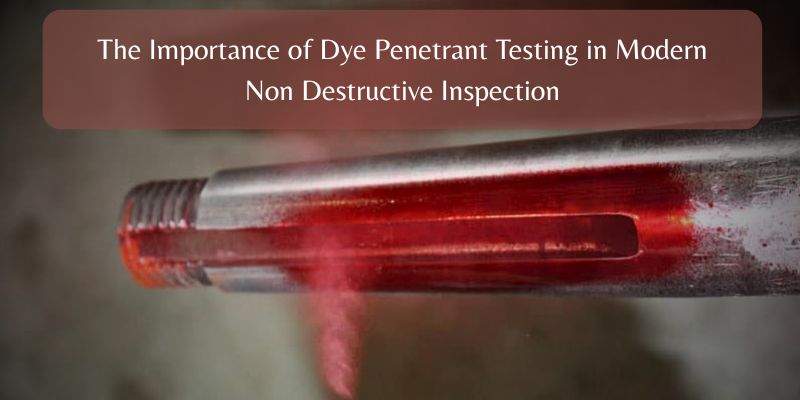
The Importance of Dye Penetrant Testing in Modern Non Destructive Inspection
Introduction to Surface Defect Detection
In industries where structural integrity and safety are critical, identifying defects before they lead to failures is essential. Manufacturing sectors such as aerospace, automotive, heavy engineering, and construction rely on advanced inspection techniques to ensure product quality. One of the most reliable methods used for surface flaw detection is the dye penetration test.
This inspection technique is widely used because it helps detect cracks, porosity, seams, and other surface imperfections that may not be visible during visual inspection. Since it does not damage the material being tested, it is categorized as a non destructive testing method.
Among the many inspection procedures used worldwide, the ndt dye penetrant test is known for its simplicity, cost effectiveness, and ability to detect extremely small surface defects.
Understanding Dye Penetrant Testing
It works on a simple scientific principle called capillary action. A liquid penetrant is applied to the surface of the component being inspected. This liquid seeps into tiny cracks and openings that are present on the material surface.
Once the liquid has penetrated these defects, excess material is removed from the surface. A developer is then applied, which draws the trapped penetrant out of the cracks, making the flaw visible to inspectors.
It is commonly used on non porous materials such as metals, ceramics, and certain plastics. It is especially effective for identifying surface breaking defects that might otherwise go unnoticed.
Role of Dye Penetrant Chemicals
A crucial element in this inspection method is the use of specially formulated penetrant liquids. The dye penetrant chemical used in this process is designed to easily flow into extremely small defects while remaining visible when drawn out by the developer.
These chemical solutions are carefully engineered to provide the following properties:
- High penetration ability
- Strong color contrast for clear visibility
- Easy removal from the test surface
- Stability during inspection procedures
Because of these characteristics, it plays an essential role in ensuring accurate inspection results.
Key Steps in the Inspection Process
The penetrant inspection method follows a structured procedure to ensure reliable results. The typical workflow is shown in the table below.
| Step | Description |
| Surface Preparation | Cleaning the component to remove oil, grease, and contaminants |
| Penetrant Application | Applying the penetrant liquid to the surface |
| Dwell Time | Allowing the penetrant to seep into defects |
| Excess Removal | Cleaning excess penetrant from the surface |
| Developer Application | Applying developer to draw penetrant out of defects |
| Inspection | Examining the component for visible indications |
This structured process helps ensure that even the smallest surface defects are clearly identified.
Applications Across Industries
The ndt dye penetrant test is widely used across multiple industries due to its reliability and versatility. It can be applied to a wide range of components and materials.
Common applications include:
- Inspection of welded joints in fabrication industries
- Crack detection in aerospace components
- Quality control of castings and forgings
- Testing automotive engine parts
- Maintenance inspections in heavy machinery
Because it requires minimal equipment and offers high sensitivity, it remains one of the most widely used inspection methods in manufacturing environments.
Importance of Proper Training
While the technique itself is straightforward, accurate inspection requires skilled professionals who understand the procedure and its limitations. This is why ndt dye penetrant test training is essential for technicians and inspectors.
Through it, professionals learn how to:
- Prepare surfaces correctly before inspection
- Apply penetrants and developers properly
- Interpret inspection results accurately
- Follow safety and quality standards
Proper training ensures that inspection results are reliable and consistent. It also helps organizations meet industry regulations and quality assurance requirements.
Advantages of Dye Penetrant Testing
Several factors make this inspection method popular in industrial environments.
Some of its key advantages include:
- Ability to detect extremely small surface cracks
- Simple testing procedure
- Cost effective inspection method
- Suitable for complex shapes and large surfaces
- Minimal equipment requirements
Conclusion
Ensuring the reliability of industrial components requires effective inspection methods that can identify defects before they lead to failures.
Organizations seeking reliable solutions and professional inspection support can benefit from working with experienced providers such as P-met, who focus on delivering quality products and services for modern non destructive testing requirements.